The Cost of Strategic Missteps - How Moving Goalposts Led to a €1 Billion Loss and 95% Profit Plunge for Germany’s Automakers


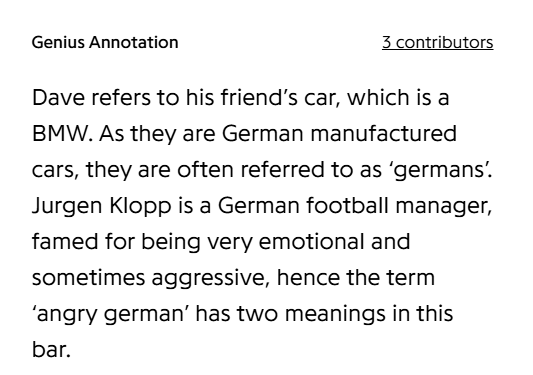
Lyrics from Peligro - Giggs (feat. Dave) from Genius.com - The cultural relevance of German automakers
So… about a month ago, my car broke down...
In that moment I wasn’t thinking about strategy decks or five-forces diagrams. I was thinking like a consumer: cost, value, functionality, and availability.
Which shop is close and reliable? How do I get this resolved at a reasonable cost, in a reasonable timeline, with as little friction as possible?
Then there’s functionality. If two options are roughly the same price, but one has better fuel efficiency, Apple CarPlay, and a smoother experience end-to-end… why wouldn’t I go for that?
Cost still matters, but so does what I’m actually getting per dollar and per kilometre. That little episode made me more aware of how I look at cars: not just as machines, but as bundles of value, convenience, and experience.
With that in mind, I found this DW segment on Germany’s auto industry interesting, as it digs into why German automakers have been facing performance headwinds.
This short DW segment on Germany’s auto industry highlights three things worth unpacking.
First, the headline numbers are hard to ignore: "The VW Group – Europe’s biggest car maker – has reported a third-quarter loss of more than €1 billion. Volkswagen's numbers come just a
day after its rival Mercedes announced also a sharp drop in profits. The VW group includes its premium brand Porsche. Porsche's profits have plunged by 95% so far this year."
Second, the commentary points to slow adaptation in EVs, software, and autonomous driving.
Third, it shows how that slow adaptation is now showing up in Germany’s two key export markets: the US and China.
Those numbers set the scene. More interesting is what they reveal about capability gaps and getting stuck between old and new business models.
I) The Capability Gap
German automakers built their reputation on engineering excellence and combustion engines. For decades, that was the game.
Now the centre of gravity has shifted to:
electric mobility
in-car software and entertainment
autonomous driving
market-specific consumer expectations, especially in China
Those are capabilities, not just features. And that’s where German automakers have fallen behind.
They didn’t suddenly forget how to build good cars.They lost ground on the skills that now define what a “good car” is.
II) Porsche: No Man’s Land
Porsche is the clearest case study in the segment.
Their core sports-car customers still love combustion engines. The sound and feel of internal combustion engine (ICE) is part of the product. At the same time, Porsche knew it couldn’t ignore EVs forever.
So they spent years bouncing between investing in EVs and staying loyal to combustion. The intent was understandable: protect the core while exploring the future. But the execution left them in a kind of strategic no man’s land.
The problem isn’t simply “they should have gone all-in on EVs.” EV demand itself has been uneven across markets.
The issue is this: Porsche ended up losing momentum in combustion without really establishing traction in EVs.
This back-and-forth may have raised costs and slowed progress on both sides. What we do know is that profits are down 95% so far this year.
III) VW and Mercedes: Losing Ground Where It Matters
For Volkswagen and Mercedes, the story is less about one product and more about where they compete.
The segment notes that German carmakers are losing market share in their two most important export markets:
The United States, where tariffs and politics are adding pressure; and
China, where local manufacturers have built cars around software, entertainment, and autonomy from day one.
Chinese customers look at cars differently from German or American buyers. In China, the car is as much a connected device and entertainment hub as it is a machine.
German OEMs were slow to react. They kept optimising for their traditional strengths while Chinese brands sprinted ahead on software, UX, and in-car experience. Germany was still making excellent combustion cars, but the definition of “excellent” was changing in their most important growth market.
IV) How They’re Trying to Catch Up
The segment also points to how German carmakers are trying to close the gap: partnerships to accelerate capabilities.
Mercedes × Momenta in China, to build up autonomous-driving software.
Volkswagen × Xpeng, to strengthen EV platforms and in-car software.
If you’re late, you borrow speed and expertise from someone who isn’t. And partnering with companies with an established, localised understanding of the market, could result in strategic and financial synergies.
Partnerships can’t fully erase years of underinvestment, but they can:
shorten the learning curve
import missing capabilities
force a shift in how the product is designed and delivered
None of this is really a story of incompetence. It’s a story of timing and incentives.
As long as combustion engines were still paying the bills, there was less urgency to rethink the business around EVs, software, and new customer expectations. Competitors without those legacy profit pools didn’t have that comfort – so they moved faster.
V) What We Can Learn Beyond Autos
Strip out the industry specifics and the pattern is familiar:
When a legacy product is still highly profitable, it’s easy to underweight the next wave.
Capability gaps build quietly in the background, then hit all at once in margins and market share.
Getting stuck between two models — old and new — is often worse than committing clearly to either.
The German auto story isn’t “good companies vs bad companies.” It’s a reminder that being world-class at yesterday’s game doesn’t guarantee relevance in tomorrow’s one.
Germany’s automakers are still making good cars. They’re just doing it in a market that now rewards different skills.
Closing that gap is less about narrative and more about hard capability building — the kind you can’t bolt on at the end.
VI) Lessons for Other Industries
If you’re not in autos, why does this matter? A few transferable lessons:
Watch where value is migrating, not just where it sits today. If new value is forming around software, data, or experience, your capabilities need to point there early.
Don’t let your best product become your biggest blind spot. Strong legacy margins are nice — until they slow the decisions you need to make.
Avoid “no man’s land.” Straddling old and new models can leave you weak in both. Be clear about what you’re optimising for.
Treat new domains as capability builds, not feature add-ons. Whether it’s AI, software, or a new channel, bolt-ons rarely close real gaps.
Done well, partnerships accelerate the application of new capabilities and can be used to plug market entrants/ international operators into on-the-ground success stories in foreign markets.


Comments